TIFF 50 Hamnet Review
TIFF 50 Hamnet Review
“Before Hamlet, there was Hamnet.”
“The play made him immortal. The boy made him human.”
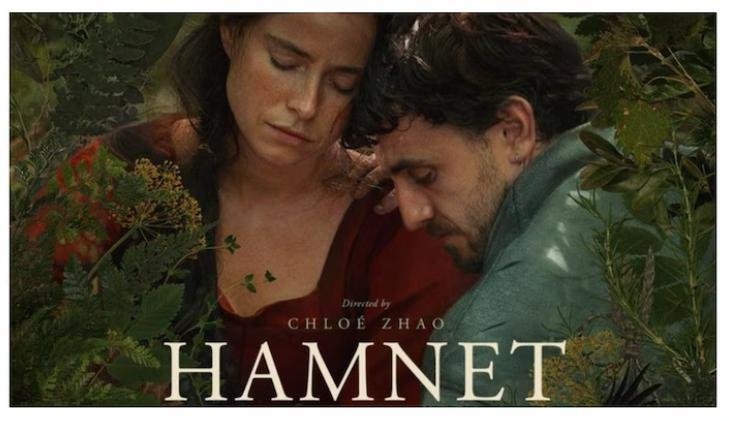
Chloé Zhao directs Hamnet, which was based on Maggie O’Farrell’s 2020 novel. Jessie
Buckley and Paul Mescal deliver brilliant performances as William and Agnes. Zhao and
O’Farrell co-wrote the screenplay. The picture premiered at Telluride and screened at
the 50th edition of TIFF. Audiences at TIFF awarded the film the People’s Choice
Award.
Focus Features has listed a limited Production partners, including Hera Pictures, Neal
Street Productions, Amblin Entertainment, and Book of Shadows. Credits include Liza
Marshall, Pippa Harris, Nicolas Gonda, Sam Mendes, and Steven Spielberg among
producers.
Zhao brings the same patient filmmaking language seen in prior work to a story set in
late 16th-century England. The director pairs with cinematographer Łukasz Żal to create
wide compositions, careful camera movement, and layered foreground detail. Composer
Max Richter provides a spare score that revisits a few core motifs and weaves them
through key scenes. Review copies across festivals emphasize the camera and score as
central engines of mood.
Performance sits front and center. Jessie Buckley anchors scenes with volatile emotion,
rapid shifts between feral energy and tight reserve. Critics used words like “devastating”
and “revelatory” to describe her work. Paul Mescal provides a quieter counterpoint,
measured and inward. Emily Watson and Joe Alwyn bring supporting roles to life with
clear motives and steady presence. Those casting choices place human weather at the
film’s core.
Grief operates as the film’s organizing theme. Zhao stages domestic rituals and
household labour with a granular focus, so daily motion becomes a test bed for memory
and loss. Language shifts across scenes, from playful exchanges to blunt silence.
Reviewers link that emotional core to the novel’s premise and to the idea that loss
shaped Shakespeare’s later writing.
Structure rests on slow-building scenes and a steady narrative pulse. Long takes
accumulate feelings through minor reactions and repeated domestic tasks. Several
reviewers labelled the rhythm patient and deliberate. Several critics identified a middle
section where momentum slackens and also noted a payoff in later sequences in which
performance, camera, and score converge. Those observations explain why responses
split between praise for emotional force and frustration with narrative economy.
Design choices emphasize use over polish. Costumes show wear and repair. Sets
foreground work and weather, not spectacle. This material approach keeps attention on
private life rather than public fame. Filming locations and set decoration place bodies
inside a season and a specific soil, rather than just inside theatrical London.
Editing and sound design act as an emotional scalpel. Editors hold on to faces long
enough for feelings to translate into small gestures. Sound mixes domestic noise,
ambient fieldwork, and Richter’s score, so moments of silence carry weight. Critics
singled out sound and editing for sharpening the mood and for making the film’s quiet
passages register like formal arguments.
The film avoids obvious biopic beats. Zhao shifts the focus to a household’s interior life
rather than to stage success or public legend. That choice reframes familiar names
through small domestic transactions. Reviewers at Telluride and beyond described the
result as an intimate portrait with public stakes, and as a creative choice that asks
viewers to accept lyric pacing over linear exposition.
The festival audience response was strong. Audience response at TIFF and early
awards-season chatter amplified critical attention, widening the film’s profile beyond
festival critics. Those facts align with press reports and the festival record.
Limits exist. Ambition stretches the screenplay across moods and time. Some sequences
test narrative momentum, and the film asks the viewer’s attention to accrue slowly. For
viewers who prefer tight plotting, those stretches will prove trying. For viewers who
prize performance and formal risk, the film rewards patience.
Bottom line, framed as guidance for you. If your priority is actor-led drama and image
work, add Hamnet to your 2025 must-see film list. If you prefer a forward-moving plot
and brisk pacing, set expectations for a slow pulse. Expect rigorous performances,
controlled direction, careful photography, and a score that threads scenes into a single
emotional register. For a festival conversation piece built around grief, memory, and
intimate craft, Hamnet delivers material worth discussing long after the credits roll.
“From a mother’s sorrow came the world’s greatest tragedy.” “The boy who
became a ghost in his father’s words.”