TIFF 2025 Review: & Sons
TIFF 50 film – & Sons review posting date September 18, 2025
“Fathers shape sons. Sons define fathers.”
“The name passes down, but the weight stays the same.”
TIFF 2025 Review: & Sons is a 2025 drama directed by Pablo Trapero and co-written
with Sarah Polley. It adapts David Gilbert’s 2013 novel. It premiered at TIFF 50 on
September 7, 2025, in the Special Presentations section.
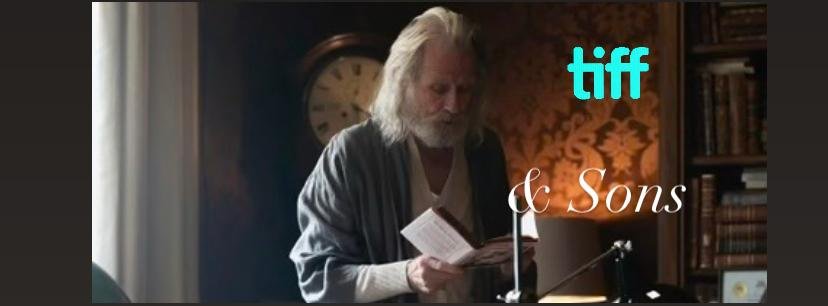
Andrew Dyer (Bill Nighy) is a once-prolific literary figure who hasn’t written for 20 years
and has isolated himself from the world. After the death of a friend, he summons his
estranged sons Richard (Johnny Flynn) and Jamie (George MacKay). He also lives with
Andy Jr. (Noah Jupe), born from an affair, whose status becomes central to a secret
that reshapes family bonds.
Trapero and Polley use a tone that blends domestic drama with mild speculative fiction.
Some may call the big twist a soft sci-fi element. The novel shifts its center of gravity
toward emotional reckonings and away from external plot mechanics.
Bill Nighy transforms himself into a reclusive, inebriated patriarch of his family. Nighy’s
truly amazing portrayal of Andrew as fragile, and rage and desperation are compelling.
Imelda Staunton plays Andrew’s ex-wife, Isabel Platt. Imelda’s performance brings
sorrow, moral weight, and grounded perspective. Imelda’s presence is a stabilizing
anchor. Johnny Flynn, who played Richard, struggles with father-son resentment,
creative ambition, and identity under his father’s shadow. His emotional breakdowns
feel earned and are truly outstanding. George MacKay’s performance as Jamie is quieter
in temperament. He returns with a camera and distance from the family. His
performance emphasizes observation over confrontation. He fades into the margins at
times, strong when present, underutilized elsewhere.
Noah Jupe’s Andy Jr. is the linchpin of the film. Reviews say Jupe embodies the
emotional core, blending naiveté, loyalty, confusion, and fear. The dynamic between
him and Staunton in the late scenes draws praise in festival commentary.
Trapero uses the house, rooms, and props as emotional loci. The estate is roomy but
cold. Reviewers cite lighting that accentuates corners, shadows, and empty spaces to
echo family distance. The cinematography switches between static wide frames and
tighter close-ups to highlight character isolation or confrontation.
Jazz and classical music play a role in Andrew’s world. His love of jazz underscores his
old life and internal rhythms. Some critics mention abrupt transitions to silence or field
sound when emotional tension peaks.
The cast enhances the sparse writing. As some parts of the script require silence, the
cast’s presence keeps the audience fully engaged. The twist in Andy Jr.’s story adds a
sense of urgency and visible tension. Its speculative perspective raises the emotional
stakes. Staunton’s scenes often hit the hardest. Her character’s moral distance from
Andrew’s delusions anchors the story. Trapero’s direction avoids melodrama during
quieter moments, allowing small gestures to speak for themselves.
Some characters feel underexplored. Flynn and MacKay receive big moments but lack
sustained interior arcs. The tonal shifts between family drama and soft sci-fi are
sometimes jarring. The twist looms so large that earlier scenes feel overlaid with
foreknowledge.
There are many questions, such as how Andrew will handle his emotional response to
his revelation. Will there be redemption or a family breakup? How will the interactions
between Andy Jr. and his older brothers play out after the truth is revealed? Will they
grow closer or further apart? Staunton’s scenes often carry underlying tension and
thematic clarity. Will there be framing that isolates or unites family members? The film’s
balance, whether the speculative twist improves the story or distracts from it.
If your priority is character, performance, and a film that weighs moral legacy more
than plot mechanics, & Sons offers rewards. If you prefer structural tightness and clear
resolution, expect moments of frustration. The film swings ambitiously, but not all
strikes land cleanly.