Review – Ella McCay
Director: James L. Brooks
It’s a harsh world out there, and cinema knows it. Lately, movies tend to fall into one of
two categories: quiet, reflective meditations on how broken everything feels, or full-
blown escapism meant to help us forget it all for two hours. That’s why Ella McCay feels
like such a pleasant surprise. It’s light on its feet, earnest without being naïve, and
genuinely interested in people, how they talk, how they clash, how they love, and how
they disappoint each other.
James L. Brooks, returning to the big screen after a long absence, hasn’t come back
with something flashy or cynical. Instead, Ella McCay feels like a throwback in the best
way: a character-driven studio comedy that values conversation over spectacle and
personality over plot twists. It’s warm, quirky, occasionally frustrating, and often very
charming.
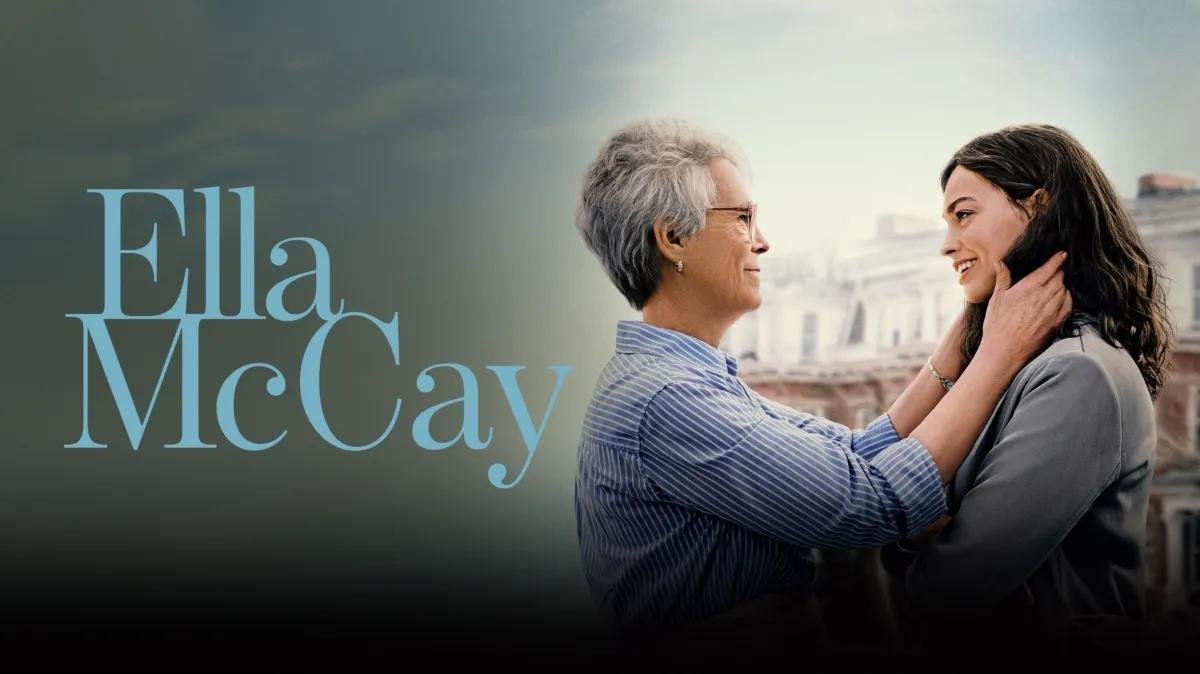
At the centre of it all is Emma Mackey, who carries the film with confidence and ease.
She plays Ella McCay, a brilliant, driven, emotionally open woman who suddenly finds
herself stepping into the role of governor at just 34. Mackey is magnetic here. She
handles Brooks’ rapid-fire dialogue, dense, rhythmic, and full of intellectual humour,
with impressive control. The cadence is tricky, the timing unforgiving, but she never
stumbles. Ella feels sharp without being smug, and passionate without being
exhausting.
What really works is how human Mackey makes her. Ella is idealistic, yes, but she’s also
messy. She cares deeply, sometimes too deeply, about her family, her work, and the
people she believes she can help. She speaks her truth, even when it’s awkward or ill-
timed. She’s not trying to be likable; she’s trying to be honest. That alone makes her a
refreshing protagonist.
Surrounding Mackey is an ensemble stacked with familiar faces who mostly rise to the
occasion. Jamie Lee Curtis is excellent as Aunt Helen, delivering another sharp,
scene-stealing performance that balances intensity with warmth. She’s funny,
commanding, and deeply believable as someone who loves Ella fiercely but doesn’t
always know how to stay out of her way.
Albert Brooks, playing Governor Bill, brings a gentle, quietly amusing presence to the
film. He’s well-meaning, conflict-averse, and just self-aware enough to realize he may
not be the right person for the job anymore. His scenes with Mackey are some of the
film’s most decisive moments. Offering moments of mentorship that feel earned rather
than sentimental.
Woody Harrelson appears as Ella’s estranged father, Eddie McCay, and while he’s
entertaining, as Harrelson almost always is, his storyline feels less essential. His return
introduces emotional weight, but it never fully lands in a way that deepens Ella’s
journey. Instead, it reinforces what we already know about her strength and
boundaries, without pushing her character into new territory.
That’s where Ella McCay starts to wobble slightly. Ella McCay is best when it stays
focused on Ella, her ideals, her internal drive, and her struggle to balance ambition with
empathy. But midway through, the story begins to drift. The spotlight shifts to the
relationships of those around her, including her anxious brother, Casey (Spike Fearn),
and his romantic subplot. While sweet, it pulls attention away from what initially made
the film so compelling.
There’s a sense that the movie becomes more reactive than proactive. Ella spends less
time chasing her goals and more time responding to other people’s emotional needs.
While that does say something about her character, her generosity, and her patience, it
also softens the film’s impact. You can’t help but wish Brooks had trusted Ella’s political
and personal journey enough to keep it front and centre.
Still, there’s a lot to admire here. Brooks’s ear for dialogue remains sharp, giving the
film a slightly offbeat rhythm that recalls his earlier work. The conversations feel
theatrical in delivery but grounded in emotion. The score adds a playful, nostalgic
warmth, and the tone remains optimistic without tipping into fantasy.
Ella McCay isn’t a film that’s trying to make a grand statement. It’s more interested in
small moments, glances, pauses, and uncomfortable truths spoken aloud. It won’t be
for everyone. Its quirks are very much on display, and its structure isn’t flawless. Ella
McCay is sincere and thoughtful, anchored by a lead performance that keeps you
engaged.
In a cinematic landscape that often feels heavy or hollow, Ella McCay is something else
entirely: a brilliant, character-led comedy that believes in idealism, even when it’s
inconvenient. And honestly, that alone makes it worth watching. “She didn’t plan on
changing the world. She couldn’t ignore it.”